Welcome. This is the personal home page of Dr. Susan Kassin, an astronomer.

This website can also be , in the style of the MUD games of the 1980s and 1990s. I used to play them during high school in the hour before closing while working at the library.

Welcome. This is the personal home page of Dr. Susan Kassin, an astronomer. This website is a text adventure, in the style of the MUD games of the 1980s and 1990s. I used to play them during high school in the hour before closing while working at the library. You explore it one room at a time.

Would you rather not play? instead.

  • Type a command at the > prompt at the bottom of the screen and press Enter. It's recommended to start by typing map.
  • You can navigate the map by typing a direction (north, south, west, east) or the name of a specific room on the map.

This website was created with the help of Claude Fable 5.2.

The Entrance Hall

You are standing in the entrance hall of a mountaintop observatory. Through the open doors you can see its twin telescope domes against the night sky. A display by the door lists tonight's observer.

The display reads:

TONIGHT'S OBSERVER

Dr. Susan Kassin
Associate Astronomer with tenure at the Space Telescope Science Institute (STScI)
Associate Research Scientist, Johns Hopkins University, Department of Physics & Astronomy

"As an astronomer, I study how galaxies form and evolve using powerful telescopes in space and on the ground."

The Control Room

You step into the telescope control room. The lights are red, to keep everyone's eyes used to the dark. Three observers sit at a row of computers, drinking coffee. Between exposures they are glad to have someone to talk to.

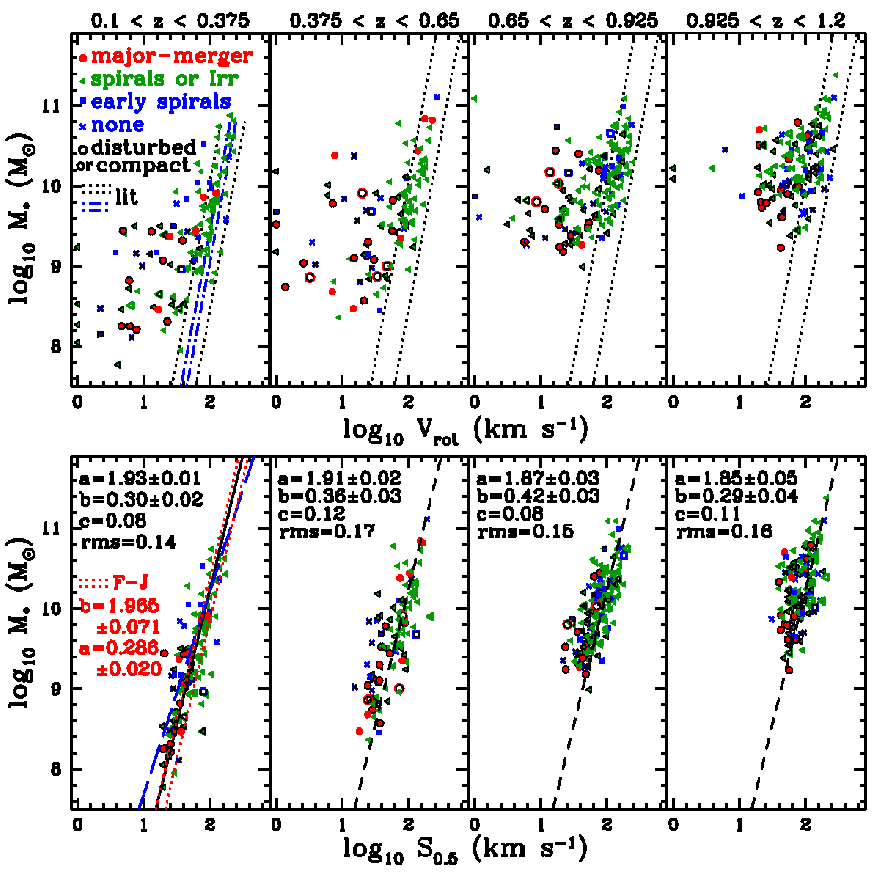
The observer on the left turns a monitor toward you. "Take the Tully-Fisher relation," the observer says. "Plot how fast a galaxy rotates against the mass of its stars, and tidy spiral galaxies fall along a line. But look back over the last eight billion years and the line dissolves into a cloud. The disturbed galaxies, the compact ones and the mergers all rotate too slowly for their mass."

"So don't throw the messy motions away," says the second, putting down a mug. "Add the velocity dispersion of the gas to the rotation, in a quantity we call S0.5 = √(0.5 Vrot2 + σg2). Now galaxies of every kind fall on one tight relation, with no detectable change in its slope or intercept from z = 0.1 to z = 1.2. It even agrees with the Faber-Jackson relation for nearby elliptical galaxies."

Eight panels in two rows. Top row: stellar mass against rotation velocity in four redshift bins, with large scatter to low velocity. Bottom row: stellar mass against S0.5 for the same galaxies, which fall along a tight line in every bin.
Stellar mass against rotation velocity (top) and against S0.5 (bottom) for 544 galaxies in four redshift bins from z = 0.1 to 1.2. The only figure in Kassin et al. (2007), "The Stellar Mass Tully-Fisher Relation to z=1.2 from AEGIS".

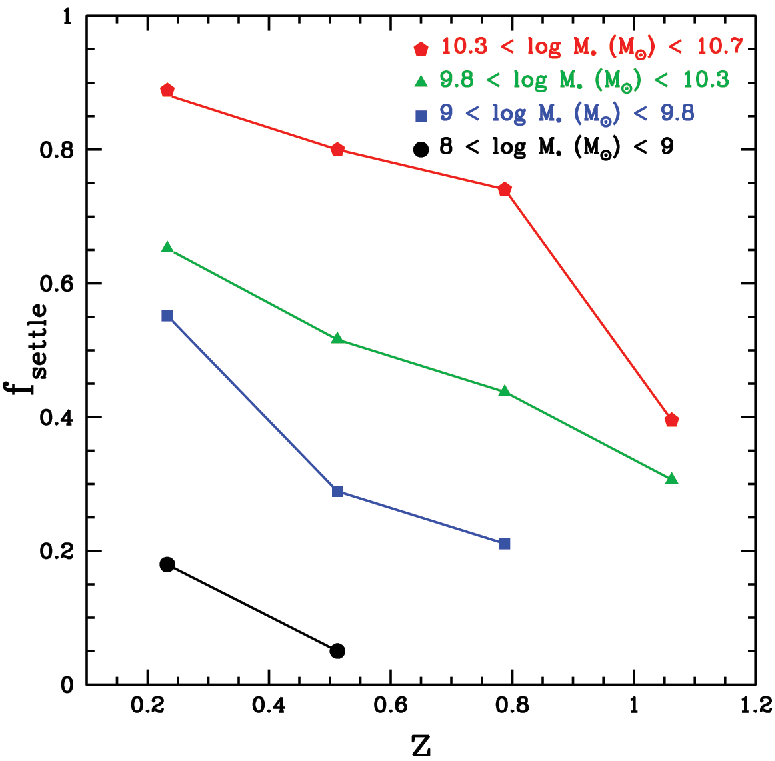
The third observer has been waiting, and pulls up another plot. "Then follow those two kinds of motion through time. At a fixed stellar mass, the disordered motions die down and the rotation speeds up. Over the last eight billion years, blue galaxies have been settling into the rotating disks we see around us today. And at every epoch, the most massive galaxies are the most settled." The three of them call this DISK SETTLING.

Line plot of the fraction of settled galaxies against redshift for four bins of stellar mass. The fraction falls with redshift in every bin and is higher for more massive galaxies.
The fraction of galaxies that are settled (Vrot/σg > 3) against redshift, for four bins of stellar mass. Figure 11 of Kassin et al. (2012), "The Epoch of Disk Settling: z~1 to Now".

A door to the east stands ajar. Green light comes through it.

The Greenhouse

         GARDEN Survey                               MEADOW Survey
     JWST program GO-2123                        JWST program GO-4291

Inspired by a drawing by Benjamin Weiner.

The door opens into a greenhouse, warm and bright after the red light of the control room. Two beds have been planted here, one for each of Dr. Kassin's James Webb Space Telescope programs, labelled below.

The Library

Shelves of journals climb to the ceiling, and a ladder on wheels leans against them. A catalogue lies open on the reading desk.

read first
Refereed Publications: first author or student/postdoc first author (18 papers)

A card on the desk says that a complete and current list of all publications is kept at SciX.

Refereed Publications: first author or student/postdoc first author (18 papers)

  1. The Importance of Galaxy-Wide Star Formation in Driving Winds at z~1Wang, Kassin et al. 2026, arXiv:2606.10116
  2. Improved SED-fitting Assumptions Result in Inside-out Quenching at z ~ 0.5 and Quenching at All Radii Simultaneously at z ~ 1de la Vega, Kassin et al. 2025, ApJ, 980, 168
  3. Distinguishing Mergers and Disks in High-redshift Observations of Galaxy KinematicsSimons, Kassin et al. 2019, ApJ, 84, 59
  4. Galaxy Inclination and the IRX-β Relation: Effects on the UV Star-Formation Rate Measurements at Intermediate to High RedshiftsWang, Kassin et al. 2018, ApJ, 869, 161
  5. z~2: An Epoch of Disk AssemblySimons, Kassin et al. 2017, ApJ, 843, 46
  6. The Evolution of Star Formation Histories of Quiescent GalaxiesPacifici, C., Kassin et al. 2016, ApJ, 832, 79
  7. Kinematic Downsizing at z~2Simons, Kassin et al. 2016, ApJ, 830, 14
  8. A Transition Mass in the Local Tully-Fisher RelationSimons, R., Kassin, S. et al. 2015, MNRAS, 452, 986
  9. Kinematic Evolution of Simulated Star-forming GalaxiesKassin et al. 2014, ApJ, 790, 89
  10. The Rise and Fall of the Star Formation Histories of Blue Galaxies at Redshifts 0.2<z<1.4Pacifici, Kassin et al. 2013, ApJ, 762, L15
  11. The Epoch of Disk Settling: z~1 to NowKassin et al. 2012, ApJ, 758, 106 (Press Release, Example Press Coverage 1, Example Press Coverage 2)
  12. The Radius of Baryonic Collapse in Disc Galaxy FormationKassin, et al. 2012, MNRAS, 424, 502
  13. Oxford SWIFT IFS and multi-wavelength observations of the Eagle galaxy at z=0.77Kassin, et al. 2011, MNRAS, 417, 2882
  14. Stellar Mass Tully-Fisher Relation Evolution in Disk Galaxy Merger SimulationsCovington, Kassin et al. 2010, ApJ. 710, 279 (note: Covington was a PhD student of J. Primack)
  15. The Stellar Mass Tully-Fisher Relation to z=1.2 from AEGISKassin et al. 2006, ApJL, 660, 35 (Example Press Coverage)
  16. Dark and Baryonic Matter in Bright Spiral Galaxies: II. Radial Distributions for 34 GalaxiesKassin, de Jong, & Weiner 2006, ApJ, 643, 804 (Cited in “Astrophysics in 2006” by V. Trimble)
  17. Dark and Baryonic Matter in Bright Spiral Galaxies: I. Near-infrared and Optical Broadband Surface Photometry of 30 GalaxiesKassin, Pogge, & de Jong 2006, ApJS, 162, 80
  18. Stellar Populations in the Antennae (NGC 4038/9): Exploring a Galaxy Merger Pixel By PixelKassin et al. 2003, AJ, 126, 1276

The Common Room

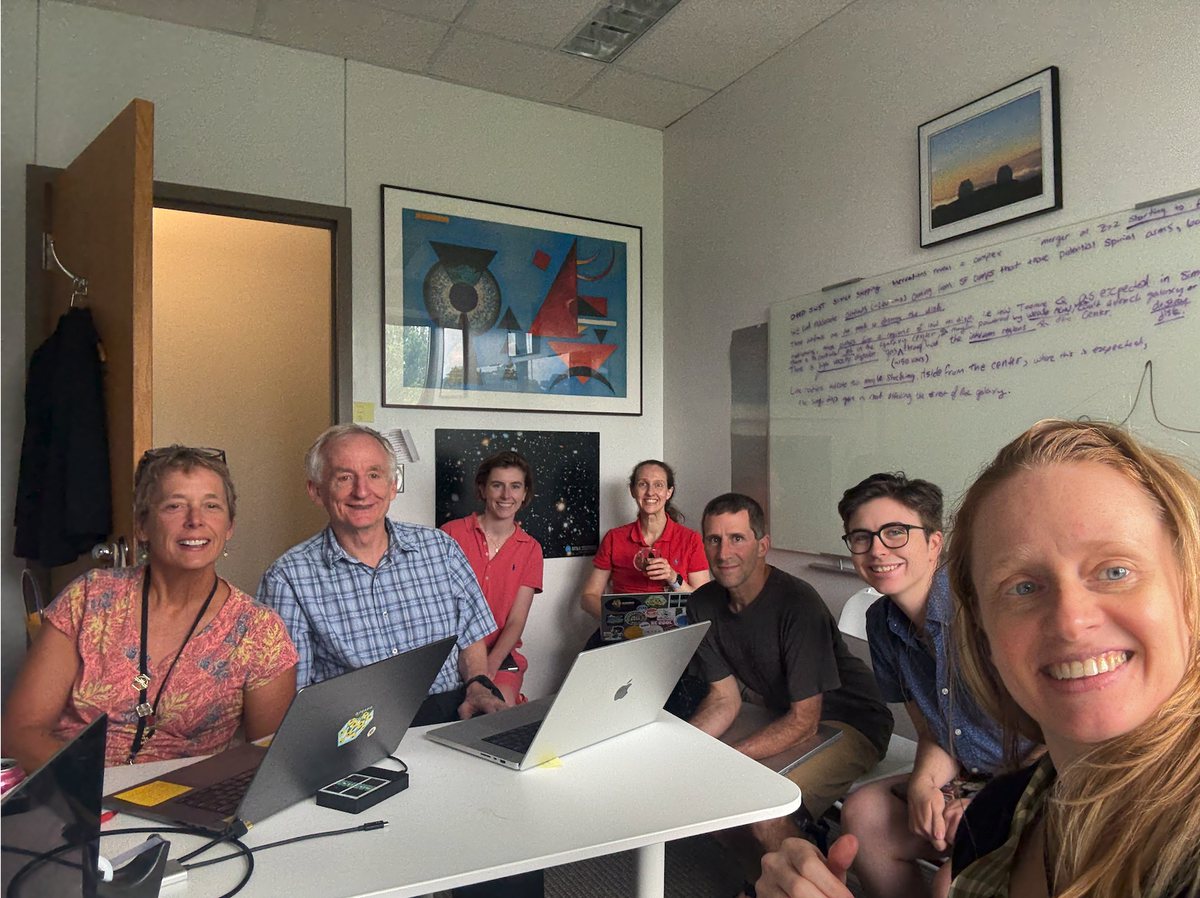
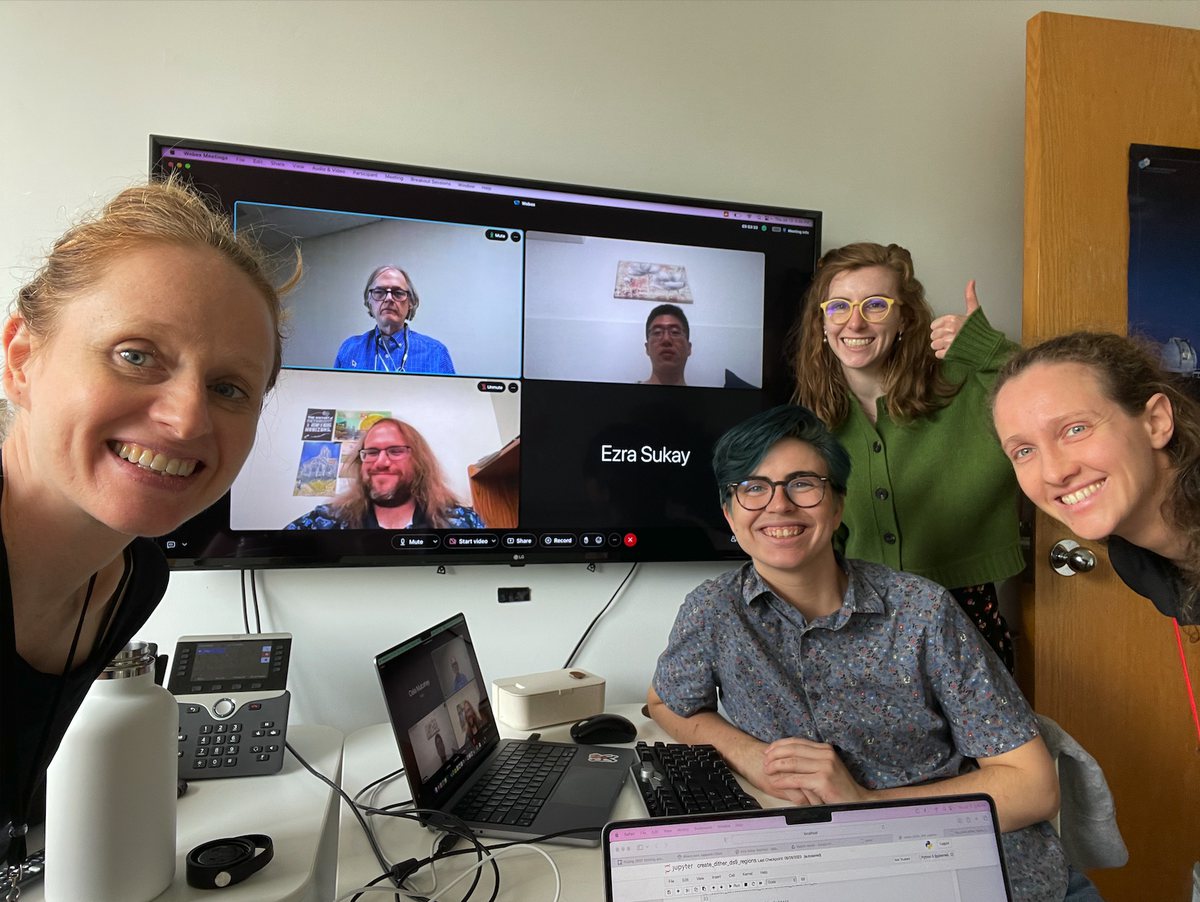
Armchairs, a whiteboard covered in equations, and a coffee machine that has seen things. This is where the Galaxy Slice and Dice Group gathers. Group photographs are pinned up by the door (type look photos to see them).

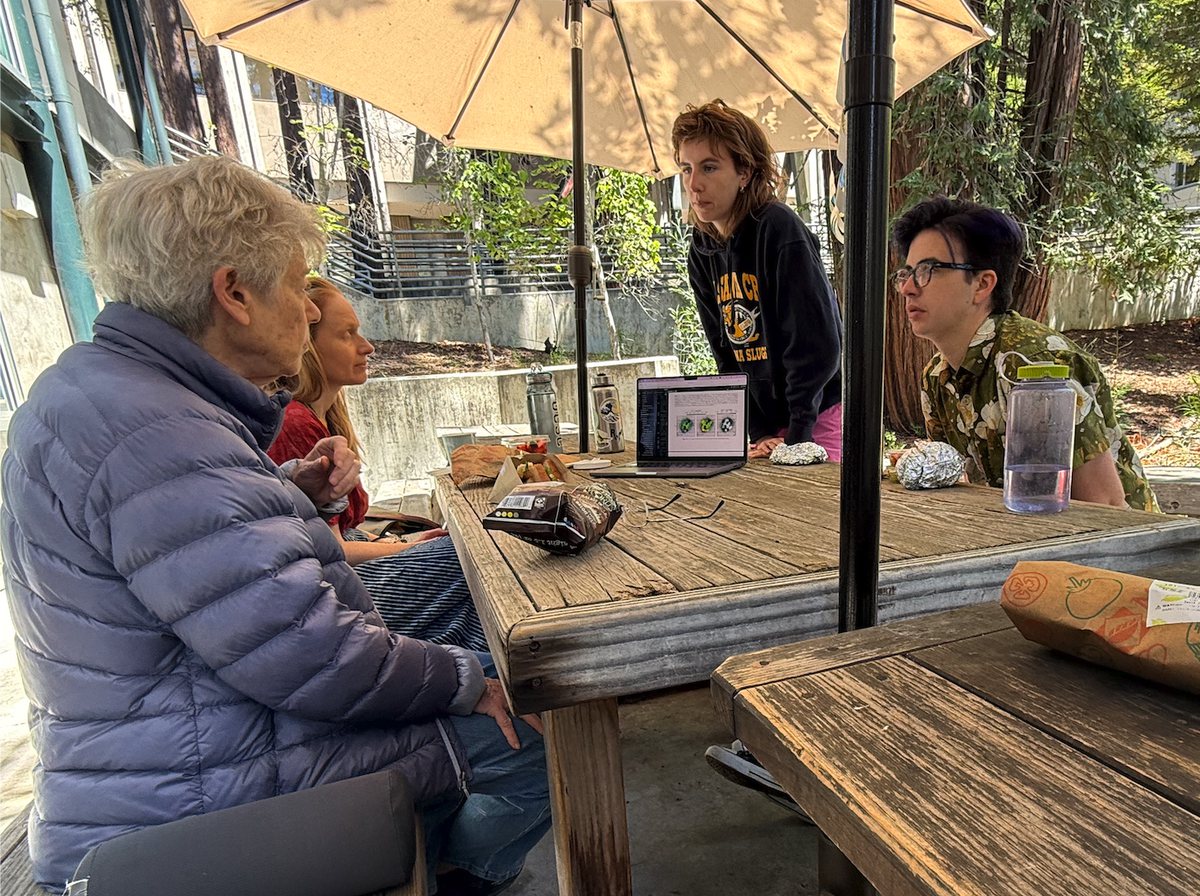
Seven people around a meeting table with laptops, smiling at the camera; a whiteboard covered in notes is behind them Four people in a meeting room in front of a wall screen showing a video call with more of the group Four people talking at a wooden picnic table under an umbrella, with a laptop open between them

Current graduate students

Celia Mulcahey

Celia Mulcahey

Graduate Student at JHU

Ezra Sukay

Ezra Sukay

Graduate Student at JHU

Collaborators

Alessandro Bressani

Graduate Student at Padova

Former PhD students

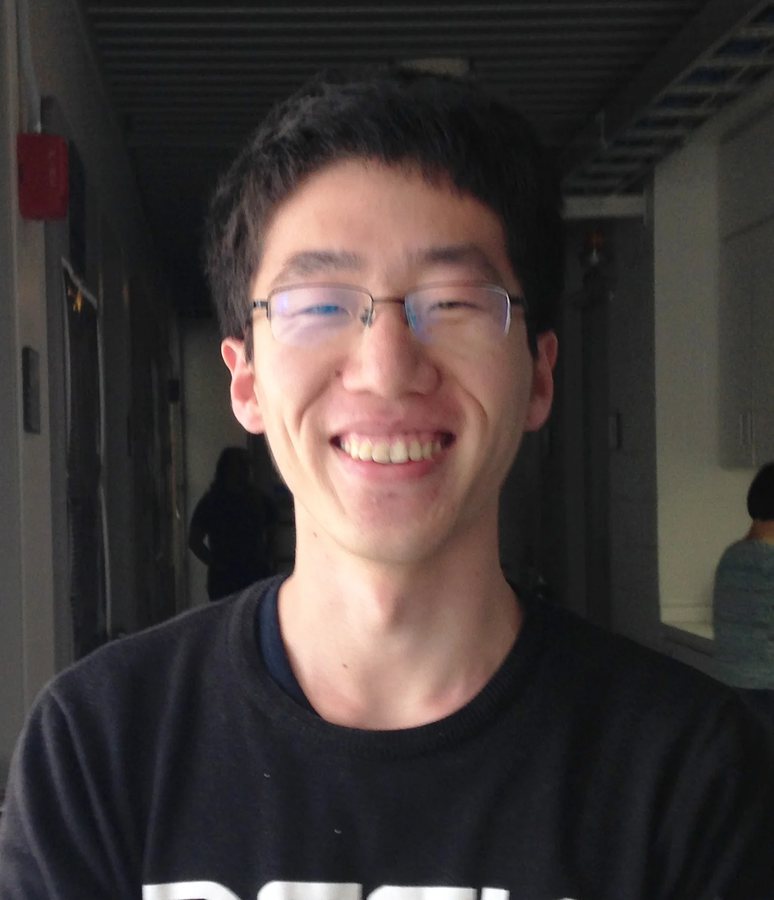
Weichen Wang

Dr. Weichen Wang

Postdoctoral Researcher at University of Milano Bicocca
Former graduate student

weichenstars.github.io

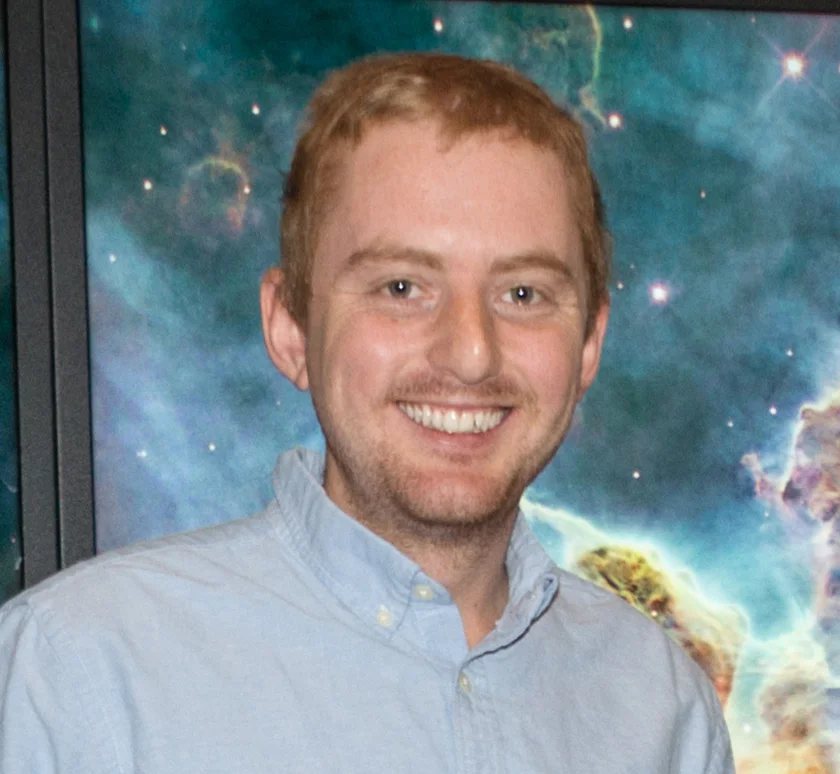
Alexander de la Vega

Dr. Alexander de la Vega

Postdoc at University of California Riverside
Former graduate student

www.linkedin.com/in/alexander-de-la-vega-07857a72

Raymond Simons

Prof. Raymond Simons

Faculty at Providence College
Former graduate student

www.rcsimons.space

Former postdocs

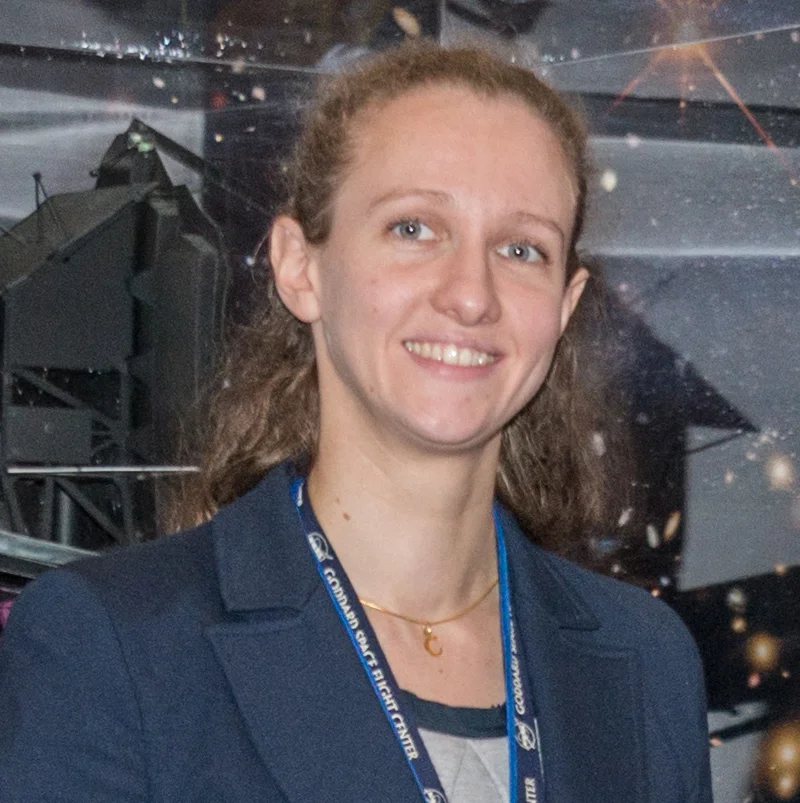
Camilla Pacifici

Dr. Camilla Pacifici

Product Owner at Zupit, Trento

Dr. Pacifici is an expert on spectral energy distribution modeling of galaxies. She has created models which take into account low to high resolution spectra of galaxies (emission lines, absorption lines, continua), complex star-formation histories motivated by the hierarchical universe, and more sophisticated dust models. Her approach to fitting data is fully Bayesian. Dr Pacifici's recent results on the star-formation histories of quiescent galaxies strongly suggest two separate quenching mechanisms for low and high mass galaxies.

Charlotte Welker

Prof. Dr. Charlotte Welker

Faculty in Physics at CUNY (City Tech) & Guest Researcher at the Flatiron Institute/CCA
Former NSF-funded Postdoc

cunyastro.org/faculty/

Former undergraduate students

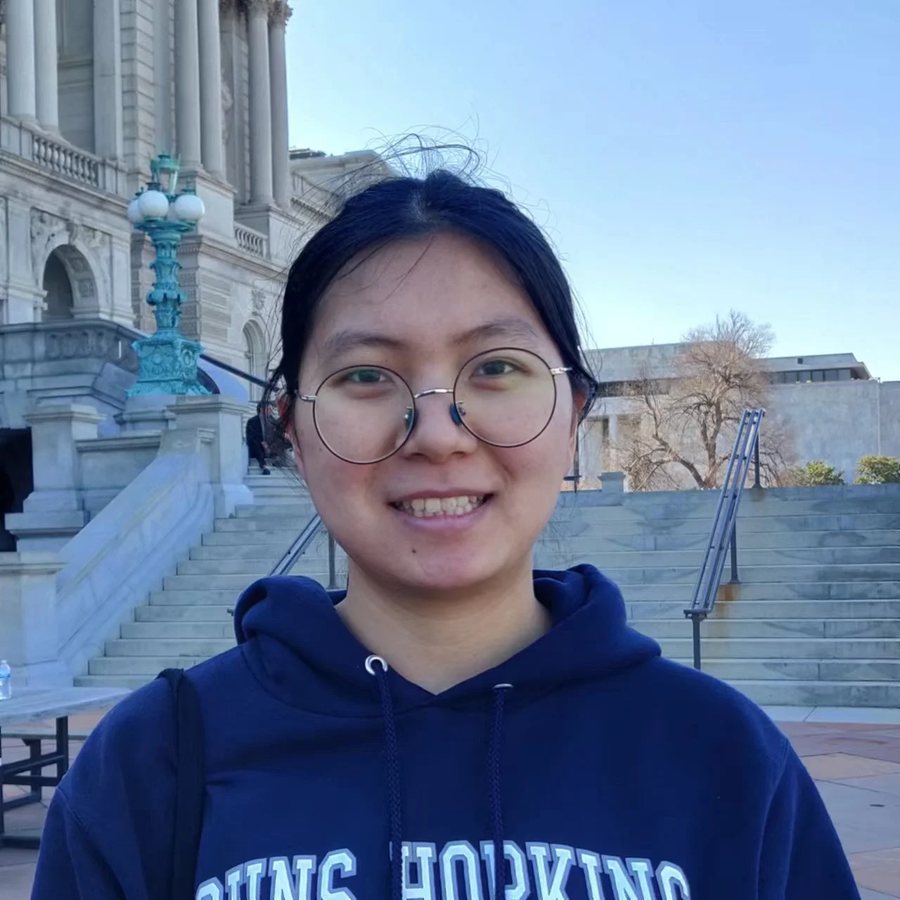
Ying Qin

Ying Qin

Former Undergraduate

Mauro Sgromo

Graduate Student, Towson University

The Hall of Records

A long, quiet gallery. Engraved plaques run along both walls, the newest nearest the door.

Appointments

4/2019+
Space Telescope Science Institute
AURA Associate Astronomer with tenure
8/2019-3/2019
Space Telescope Science Institute
AURA Associate Astronomer
1/2013 - 7/2018
Space Telescope Science Institute
AURA Assistant Astronomer
2015+
Johns Hopkins University
Department of Physics & Astronomy
Associate Research Scientist
1/2011 - 12/2012
NASA's Goddard Space Flight Center
NASA Postdoctoral Program Fellow - JWST Fellow
1/2008 - 12/2010
Oxford University, Department of Physics
Postdoctoral Researcher
7/2007 - 12/2007
Institut d'Astrophysique de Paris
Chateaubriand Fellow
9/2004 - 7/2007
University of California Observatories / Lick Observatory, University of California at Santa Cruz
Postdoctoral Researcher

Education

1999 - 2004
The Ohio State University
M.S. Astrophysics, PhD Astrophysics
1995 - 1999
Columbia College, Columbia University
B.A. Physics, minor Mathematics

The Mail Room

The spiral stairs end in the mail room. Pigeonholes cover one wall and a telephone sits on the counter. A card is pinned above it.

The card reads:

Call or Visit
Space Telescope Science Institute
3700 San Martin Drive
Baltimore, MD 21202
(410) 338 - 4909

Email
my last name @ stsci.edu

                +----------------+ +------------+
                |  Control Room  +-+ Greenhouse |
                +-------+--------+ +------------+
                        |
+-------------+ +-------+--------+ +---------+       +----------------+
| Common Room +-+ Entrance Hall  +-+ Library |       | Astro Scholars |
+-------------+ +---+--------+---+ +---------+       +----------------+
                    |         \               (its own website, coming soon)
          +---------+-------+  +-----------+
          | Hall of Records |  | Mail Room |
          +-----------------+  +-----------+
                                (downstairs)

To go to a room, type its name. The highlighted room is where you are now. Astro Scholars is a separate website, not a room.

Astro Scholars

Astro Scholars will have its own website. It is not open yet.

How this site works

Commands

look
describe the room you are in again
north, south, east, west, up, down
walk that way (n, s, e, w, u, d for short)
back
return to the room you were in before
go <place>
go straight to home, research, surveys, publications, group, cv or contact
exits
list the ways out of the room
map
show a map of the rooms
who
list the members of the Galaxy Slice and Dice Group
look <name>
show a group member, for example look celia
photo <name>
show their photograph, for example photo celia
look photos
show the group photographs
read first
read the publication list
read cv
read the curriculum vitae
clear
clear the screen
plain
leave the adventure and show everything as an ordinary web page

What is a MUD?

MUDs (multi-user dungeons) were text-only online games of the 1980s and 1990s. Players read a description of a room and typed short commands to move around and look at things.